Imagine traveling through one of the driest deserts on Earth and suddenly finding entire plains covered in pink, purple, yellow and white flowers. The mountains are still dry, the soil is sandy, and yet thousands of wildflowers stretch across the landscape.
This is the Desierto Florido, Chile’s Flowering Desert, a natural phenomenon that transforms parts of the Atacama Region after unusually rainy winters.
See Chile’s Flowering Desert Before the Blooms Disappear – Book Your Guided Tour!
The Atacama Desert is blooming in 2026, making this an especially interesting year to visit northern Chile. Flowers began emerging during the late winter and spring, with October expected to offer some of the most impressive landscapes. Certain species may continue flowering into November, depending on local conditions.
There are several ways to experience the phenomenon. You can visit Desierto Florido National Park near Copiapó, stay on the coast in Bahía Inglesa, or join an organized Flowering Desert excursion from La Serena.
Here is how to choose the best option for your trip.
Why does the Atacama Desert bloom?
The Atacama Desert is famous for its exceptionally dry climate. In some areas, rainfall is so scarce that plants must survive for long periods without enough moisture to grow above the ground.
Many native species have adapted by producing seeds, bulbs and other underground structures that can remain dormant during dry years.
When sufficient winter rain arrives, these plants begin to grow. Within weeks, previously barren terrain can become covered with wildflowers.
According to Chile’s National Forestry Corporation (CONAF), the Flowering Desert phenomenon can involve more than 200 species of annual plants and geophytes.
Among the most recognizable are the pata de guanaco, which produces striking pink and purple flowers, the añañuca, the suspiro and the garra de león.
Different plants bloom at different times. This explains why one area may be covered in flowers while another, just a short drive away, appears almost completely dry.
The phenomenon is particularly fascinating because it is unpredictable. Even after a spectacular flowering season, there is no guarantee that the desert will bloom again the following year.
Is the Atacama Desert blooming in 2026?
Yes. Chile’s Atacama Region experienced the conditions necessary for the Flowering Desert phenomenon during 2026.
The first flowers began appearing in August, followed by more extensive flowering during September and October.
The greatest variety and abundance of flowers were expected around mid-October, although some species may continue to bloom later in the season.
For travelers planning a visit in late October or November, the condition of the flowers will depend on the location, remaining moisture and weather.
The flowering season is underway, but that does not mean every part of the desert is covered in flowers at the same time.
Before traveling, check the latest information from CONAF’s official Flowering Desert 2026 guide.
Where to see the Flowering Desert in Chile
The Flowering Desert is not a single destination. It is a natural phenomenon that occurs across different landscapes in the Atacama Region.
Three areas are especially relevant for visitors.
Desierto Florido National Park near Copiapó
Desierto Florido National Park is located approximately 30 kilometers south of Copiapó, the capital of Chile’s Atacama Region.
Established in June 2023, the park protects approximately 57,107 hectares across two sectors: Travesía and Chañarcillo.
Its protected landscapes include plains and hills where native desert plants remain dormant until rainfall provides suitable conditions for growth.
The park is especially interesting for travelers who want to photograph the wildflowers, learn about desert ecosystems and explore one of Chile’s newest national parks.
It is important to know that the protected area has limited visitor infrastructure. You should arrive with drinking water, sun protection and everything necessary for your visit.
For information about access roads, protected areas and travel recommendations, visit our complete guide to Desierto Florido National Park.
Llanos de Challe National Park and Carrizal Bajo
Farther south, near the Pacific coast, Llanos de Challe National Park protects another remarkable section of the Atacama Desert.
The coastal influence produces conditions that differ from those in the interior. During flowering years, native plants can cover sandy plains and hillsides with colorful flowers.
The areas around Carrizal Bajo and Llanos de Challe are particularly relevant for travelers visiting from La Serena.
Some organized excursions specifically explore this coastal section of the Flowering Desert, providing an alternative for visitors who prefer not to rent a vehicle.
Huasco and Freirina
The surroundings of Huasco and Freirina can also display significant flowering during favorable years.
These destinations combine coastal landscapes, desert valleys and hills where different plant species emerge according to rainfall and local conditions.
When traveling independently, check recent information about accessible roads and flowering areas before setting out.
How to visit Desierto Florido National Park from Copiapó
Copiapó is the most convenient city for visiting Desierto Florido National Park itself.
The protected area lies roughly 30 kilometers south of the city. According to CONAF, the access route involves road C-30, Route 5 and the C-382 road near Nantoco.
During the flowering season, vehicles are permitted only on authorized roads. Within the park, CONAF specifically restricts vehicle circulation to route C-382, while other areas must be explored on foot using designated access points.
The park’s published visiting schedule is Tuesday to Sunday, from 9:00 a.m. to 6:00 p.m. Confirm the current opening conditions before departure.
Copiapó provides a useful base because it offers hotels, restaurants, supermarkets and other services for travelers.
If you have several days available, you can also explore other attractions in the Atacama Region.
The landscapes around Nevado Tres Cruces National Park, the Salar de Pedernales and the region’s high-altitude lagoons offer a completely different side of northern Chile.
You can explore guided tours and outdoor activities departing from Copiapó to extend your itinerary.
These excursions are additional experiences around Copiapó rather than dedicated visits to Desierto Florido National Park.
Where to stay near the Flowering Desert: Bahía Inglesa
One of the pleasures of traveling through the Atacama Region is the contrast between the desert and the Pacific Ocean.
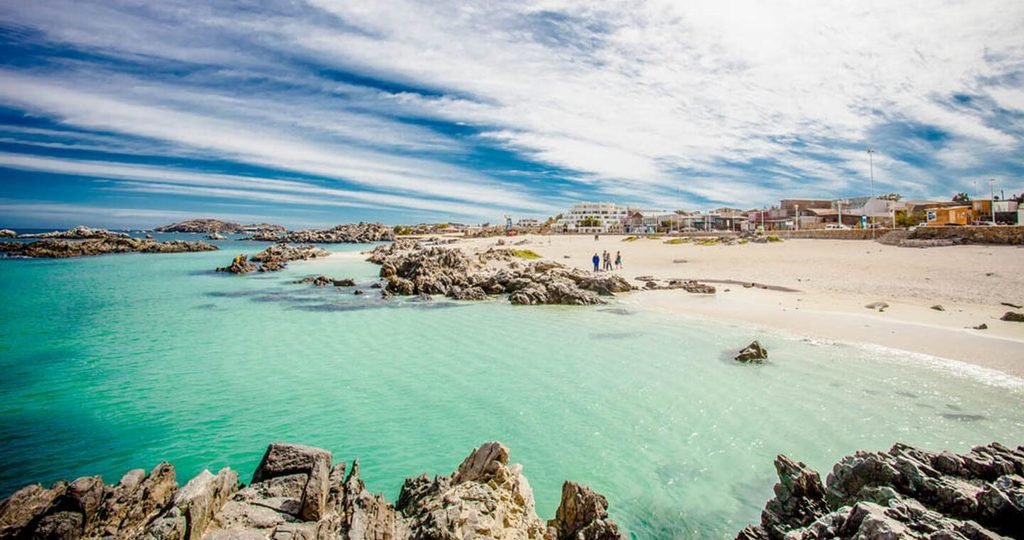
Bahía Inglesa, a small coastal destination near Caldera, is known for its pale sandy beaches and remarkably clear turquoise water.
It is an attractive alternative to staying in central Copiapó, particularly for travelers who want to combine the Flowering Desert with a few days by the sea.
You could spend one day exploring the national park and another enjoying the beaches, restaurants and coastal scenery around Bahía Inglesa.
The town is farther from Desierto Florido National Park than Copiapó, so take the additional driving distance into account when planning your visit.
For accommodation, you can check this recommended hotel in Bahía Inglesa, compare room availability and see the prices for your travel dates.
For couples and families planning a longer stay, combining the Flowering Desert with Bahía Inglesa can be a particularly enjoyable way to explore the region.
Flowering Desert tour from La Serena: an easier way to see the blooms
If you are visiting Chile without a rental car, La Serena offers an interesting alternative.
Located farther south in the Coquimbo Region, La Serena is one of northern Chile’s most popular coastal cities. It offers beaches, historic streets, restaurants, accommodation and a variety of excursions.
During the flowering season, visitors can join a guided day trip from La Serena towards the coastal Flowering Desert near Carrizal Bajo and Llanos de Challe National Park.
This tour explores the coastal flowering areas, not Desierto Florido National Park near Copiapó.
That distinction is useful when choosing where to stay.
For travelers based in La Serena, the organized excursion avoids the need to drive north independently and search for suitable viewing areas.
What is included in the Flowering Desert tour?
The published excursion includes shared transportation, pickup from accommodation within the urban area, a bilingual Spanish-English guide and a box lunch.
The full-day experience lasts approximately 13 hours and 15 minutes, with a scheduled departure around 6:15 a.m. and return around 7:30 p.m.
The advertised price is CLP $77,000 per person, subject to changes and availability.
Departures operate on selected dates during the September-to-November season and require a minimum of six passengers.
During the journey, travelers head north towards Carrizal Bajo, where the coastal desert can display spectacular seasonal blooms.
A guide can help visitors understand the plants, landscapes and environmental conditions behind the flowering phenomenon.
If you are staying in La Serena and want to experience the Flowering Desert without organizing transportation yourself, you can check dates, prices and availability for the Flowering Desert tour from La Serena.
Because the tour operates during a limited season, it is worth confirming departures before arranging the rest of your itinerary.

Where to stay in La Serena for the Flowering Desert tour
La Serena is a practical place to spend several nights when visiting northern Chile.
Its coastal setting, historic center and range of restaurants make it an appealing destination beyond the Flowering Desert excursion itself.
If you plan to join the early-morning tour, staying within the city can make the departure more convenient.
One accommodation option is Hotel Francisco de Aguirre, a well-known hotel in La Serena.
You can check Hotel Francisco de Aguirre’s rooms, prices and availability before confirming your travel plans.
It is worth allowing additional time in La Serena rather than returning immediately after the Flowering Desert tour.
The nearby Elqui Valley is famous for its mountain landscapes, vineyards, pisco production and astronomical tourism.
Other excursions from the city include coastal wildlife experiences, visits to Isla Damas and trips through the surrounding valleys.
If you are planning several days in the region, discover more tours and activities departing from La Serena.
Copiapó or La Serena: which is better for seeing the Flowering Desert?
Both cities can serve as starting points, but they offer different experiences.
Choose Copiapó if you want to visit Desierto Florido National Park. It is much closer to the protected area and allows you to explore the park independently, subject to access restrictions.
Copiapó is also a good option if you want to combine the flowers with a visit to Bahía Inglesa or other destinations in the Atacama Region.
Choose La Serena if you prefer a guided day trip to the coastal Flowering Desert. The organized excursion visits the area near Llanos de Challe and Carrizal Bajo, making it suitable for travelers who do not want to drive long distances themselves.
La Serena also offers a wider itinerary around the Elqui Valley, the coast and nearby wildlife destinations.
Neither option is automatically better. The right choice depends on the specific flowering area you want to see and how much time you have available.
What is the best month to see the Atacama Flowering Desert?
The Flowering Desert generally attracts the most visitors between September and November, in years when rainfall produces a significant bloom.
September can bring the first extensive flowering in some areas.
October is often particularly promising because several species may be in flower at the same time.
November can still offer opportunities to see late-flowering plants, but the landscape may already be changing as the desert dries.
During 2026, October was identified as an especially important month for the flowering season.
If you are traveling near the end of October or in November, keep your itinerary flexible and look for recent local reports rather than relying on photographs taken weeks earlier.
What to bring when visiting the Flowering Desert
Although spring temperatures are generally more comfortable than the heat of summer, the Atacama Desert still requires preparation.
Bring plenty of drinking water, sunscreen, sunglasses, a hat and comfortable walking shoes.
A light jacket is useful for coastal areas, where the wind can be surprisingly cool.
If you are driving independently, download your maps before leaving the city. Mobile coverage may be limited in remote areas.
Travelers interested in photography should consider visiting during the morning or late afternoon, when softer sunlight brings out the contrast between the colorful flowers and the dry desert mountains.
How to protect the Flowering Desert during your visit
The Flowering Desert is a fragile ecosystem, even when the ground appears empty.
Many plants survive below the surface between flowering events. Vehicles, footsteps and other disturbances can damage seeds, bulbs and roots that may remain dormant for years.
CONAF asks visitors to follow established roads and walking routes, use authorized parking areas and avoid entering flower-covered areas outside designated paths.
Do not pick flowers or collect seeds. Do not bring pets into protected areas, and always take your rubbish away.
Avoid disturbing wildlife, including insects that pollinate the native plants.
The future of this extraordinary phenomenon depends partly on how visitors treat the landscape today.
Frequently asked questions about the Atacama Flowering Desert
Does the Atacama Desert bloom every year?
No. Large flowering events require sufficient rainfall and favorable environmental conditions. Significant blooms may be separated by several years, and the extent of flowering varies considerably between seasons.
Is the Atacama Desert blooming in 2026?
Yes. The Flowering Desert phenomenon has occurred in parts of Chile’s Atacama Region during 2026. October has been one of the main months of the season, although the condition of individual flowering areas changes over time.
Where is Desierto Florido National Park?
Desierto Florido National Park is located approximately 30 kilometers south of Copiapó, in Chile’s Atacama Region. The protected area was established in 2023 and covers approximately 57,107 hectares.
Can I visit the Flowering Desert from La Serena?
Yes. Seasonal guided excursions depart from La Serena towards the coastal flowering areas around Carrizal Bajo and Llanos de Challe National Park. These are separate from Desierto Florido National Park near Copiapó.
Can I visit Desierto Florido National Park without a guide?
Yes, provided the park is open and you respect the authorized access roads, walking routes and visitor regulations established by CONAF.
Where should I stay to visit the Flowering Desert?
Copiapó is convenient for visiting Desierto Florido National Park. Bahía Inglesa is an attractive coastal alternative, while La Serena is suitable for travelers booking an organized excursion to the southern coastal flowering areas.
Is November too late to see the Flowering Desert?
Not necessarily. Some species may still be flowering in November, depending on the weather and location. However, you should check recent updates because the main flowering period may already have passed in some areas.
How many days do I need?
One full day can be enough to visit a specific flowering area. A two- or three-day itinerary allows more flexibility and makes it easier to combine the flowers with the beaches, towns or other landscapes of northern Chile.
Plan your trip to Chile’s Flowering Desert
The Atacama Flowering Desert is an unusual opportunity to experience a landscape that changes dramatically when conditions are right.
If you want to visit Desierto Florido National Park, plan your trip around Copiapó and consult our dedicated national park visitor guide for practical information.
If you are staying in La Serena, a guided Flowering Desert day trip can be a convenient way to explore the coastal blooming areas.
Whichever route you choose, check the latest flowering conditions, respect the protected landscape and give yourself time to appreciate the extraordinary contrast between the desert and its temporary fields of flowers.